Now the Marker of Time marks time
As light shifts in the dark
Upon itself and ebb turns back to flow
And we make the candle glow.
Now the Marker of Time marks time
As light shifts in the dark
Upon itself and ebb turns back to flow
And we make the candle glow.
An Observance for the Winter Season
The Sun sits low in the sky and dips even lower as his year draws to an end. The pale light of day soon passes to night. The tide ebbs. Each flower, each tree, each head of grass and grain, has shrunk to back to kernel: to hard seed, to nut, to reserved essence, biding the time until the light grows again and roots find a way through nurturing soil.

For now, Epona traverses the paths of the dead, riding through the dark, through earth and sea, each life that has passed moving with her, finding the way that she opens for them, losing the memories she closes behind them. The Sun will return and a new year begin, but now is the time of repose.
Epona, we are with you in the time of waiting, we pause with you now in the dark of the year.
We mark the time until the longest night when you stir the deepest well of the darkness like a river rising from the caverns of gloom.
Darkness falls
on the ivy leafYulelight glistens
on the holly boughAs red fire stirs
in the kindling.We count three days
to the longest nightThree more till the glimmer
of a longer dayThen seven to the eve
of New Year CalendsThese days we count
from the Feast of EponaFirst festival
of the Year’s turning.
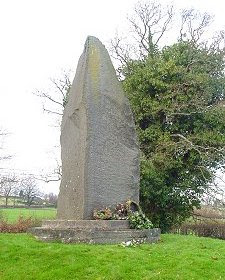

“There is no counsel, no lock, no opening…”
So wrote the bard Gruffudd ab yr Ynad Coch in response to the death of
Llywelyn ap Gruffudd, the last native Prince of Wales in December 1282.
It is a record of despair. The death of Llywelyn and the subsequent invasion by Edward I meant the end of a line of rulers of Gwynedd that stretched back through Maelgwn Gwynedd to Cunedda and the Brythonic chieftains of ‘The Old North’. Wales had retained the Brythonic heritage of the island of Britain and now a Norman-English king invaded and crowned his own son as Prince of Wales.
What is more, Llywelyn’s head had been cut off after he was killed. Although they allowed his body to be buried in Wales they took his head to London and displayed it on London Bridge. Was this a simple act of spite or something done in full knowledge of its symbolic significance? Gruffudd ab yr Ynad Coch certainly made much of the beheading:
“His head has fallen and with it our pride
Fear and surrender are all we have left
His head has fallen – a dragon’s head
Noble it was , fierce to our foes
His head is stuck with an iron pole
The searing pain of it runs through my soul,
This land is empty – our spirit cut down.
His head had honour in nine hundred lands
Proud king, swift hawk, fierce wolf
True Lord of Aberffraw”
(from my translation of the elegy which can be viewed in full HERE)
The cutting off of heads in Midwinter is a motif of the season. Think of Gawain riding through the borderlands of Wales and Cheshire to meet the Green Knight to offer his own head a year after he had cut off the Green Knight’s head and it had magically re-attached itself. Gawain rode from the court of Arthur who himself, in another story, disappeared into the Otherworld awaiting his time after being mortally wounded.
Then consider the episode in the Second Branch of Y Mabinogi where the mortally injured Brân asks the other survivors of the battle in Ireland to cut off his head:
‘Take the head’ said he ‘and bring it to the White Hill in London, and bury it with its face towards France. And you will be on the road a long time. In Harlech you will be seven years in feasting, the Birds of Rhiannon singing to you. The head will be as good company to you as it was at its best when it was ever on me. And you will be at Gwales in Penfro for eighty years. Until you open the door facing Aber Henvelen on the side facing Cornwall, you will be able to abide there, along with the head with you uncorrupted. But when you open that door, you will not be able to remain there. You will make for London and bury the head.
In the Welsh Triads it is said that the burial of the head of Brân protected Britain from invasion, but that Arthur removed it “because it did not seem right to him that his island should be defended by the strength of anyone, but by his own”(*).
Severed heads, it has been claimed, were an integral part of pagan celtic religious practice(**). Be that as it may, as we approach the Winter Solstice we might think of rebirth or renewal. But before re-birth there must be a death. In the story of Brân, in order for him to retain his protective function, his head must be struck off and buried. Llywelyn’s bard could not see this because the head had been taken to London not, as Brân’s, for burial but to be stuck on a iron pole on London Bridge. There could be ‘no counsel, no lock, no door’ to be opened at the appointed time and so no opening to a new life. His despair is understandable historically.
But the heritage of the Old North lived on in Wales, nurtured by bards as a sustaining inspiration for renewal. It was taken up again by Owain Glyndwr two hundred years later before he disappeared without being captured so could potentially rise again, and it has never been forgotten, inspiring bards writing in the Welsh strict metres still today (***).
This is both a universal and a personal initiatory theme. However labyrinthine the paths of the dead, however gloomy the darkness of the Netherworld, shall we not follow our guide on the path, the dark figure on the Grey Mare, through the last shadows and on past forgetting to where we have always lived, and always will? And will the Sun not rise again on our hopes as well as our fears? May the gods will it so.
* Triad 37
** See, for instance, Anne Ross Pagan Celtic Britain chapter two.
*** See for example, the work of Gerallt Lloyd Owen whose awdl Cilmeri hauntingly re-plays the events of Llywelyn’s death.
After the final lines of ‘Mydwyf Merweryd’ (‘I am the Pulse …’) from The Book of Taliesin
So the bard instructs the chieftain as to what is valuable and what, therefore, should please him: Gwion’s River (the flow of inspired song), fine weather, fragrant mead and the inspired utterances of his druids.
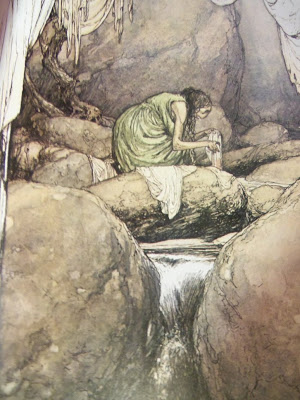 {Arthur Rackham}
Of all the lore concerning the coming of Winter and the transitions (both personal and mythological) which shape the deeper significances of the dark months at the the year’s end, the image of the Washer at the Ford, the Cailleach, the Shadow Woman – call her what you will – is most deeply embedded in my responses to Winterfall. I have written of her elsewhere but I recently came across this interleaving of deep mythos, local folklore and Brythonic legend in a folklore record from North Wales:
“… there is a parish called Llanferrys and Rhyd y Gyfarthfa, ‘Ford of the Barking’, is there, and in olden times the dogs of the country would come there to bark, and no-one would venture to go to see what was there until Urien of Rheged came. He saw nought but a woman washing. And then the dogs stopped barking, and Urien took hold of the woman and had possession of her.”
from T. Gwynn Jones Welsh Folkore and Custom (1930)
The story continues that she is the daughter of the King of Annwn but is destined to have a child fathered by a christian man. She tells him to return at the end of the year and when he returns she presents him with a son and a daughter: Owain and Morfudd.
This is interesting in itself because of the conflation of historical and legendary material from the ‘Old North’ of Welsh tradition with a local tale which itself contains elements of both mythological and folkloric provenance. The coupling of Urien, the sixth century king of the Brythonic territory of Rheged in what is now southern Scotland and north-western England, with the daughter of the King of of the Otherworld (Gwyn ap Nudd) suggests a union between Thisworld and the Otherworld intricate with a sovereignty theme in that a king in Thisworld has to marry and Otherworld woman to validate his power (consider the marriage of Pwyll to Rhiannon in the first of the four Mabinogi tales). At its worse, the tale as related here however portrays the union as little more than a casual rape by a powerful lord of a woman washing her clothes in the river. But identifying the woman as an Otherworld princess shifts the tale to another level. Would such a woman be washing her clothes in the river and would she permit herself to be raped? It seems unlikely on both counts, but Otherworld women are rarely what they seem. The story appears to rationalise her compliance with Urien in that it is her ‘destiny’ to bear his children. But the image of the Washer at the Ford is far too profoundly embedded in the mythos for its appearance here to be taken, as the wording above has it, as “nought but a woman washing”.
In some occurrences of the sovereignty theme in folklore and myth, the king has to be prepared to couple with the goddess of the land both in her winter and her summer aspects, or he has to take her as an old hag so that she may become a young woman again. This is often also a variant in stories about dalliances with Otherworld women who are able to change their form from beautiful to hideous and there is sometimes a suggestion of initiatory processes in this being accepted by the would-be lover. Such an initiatory journey may itself be portrayed in disguised form in story and so find its way into the folklore record. A man may have to be prepared to marry an old crone who becomes a beautiful young woman after he has slept with her, as in stories that made their way into mainstream literature such as Chaucer’s Wife of Bath tale. A young woman might equally have to become subject to an ogre or, in the classic fairy story, to kiss a frog. It is the confrontation with otherness that is enacted here, being prepared to be tested or to step out of the comfort zone of everyday life. When such stories are embedded in the folk or faërie lore record they tend to reflect in a generalised way personal journeys of quest, change or psychological discovery. At the religious level they are reflective of initiation into the mysteries. Mythologically they embody the personas of the gods through the changing seasons, the changes of history, geology, cosmology. The Washer at the Ford is not to be ‘possessed’ at a whim and it is significant that it has to wait for a great figure like the legendary Urien to approach her.
We have here, then, an impacted record of change. A change of season from Autumn to Winter where the Washer sits at the threshold of the two seasons wailing for the fate of the God of Summer as the leaves fall from the trees all about her. A change of status for one who dares to cross the ford and confront her. A change that also reflects here shifting historical, cultural and religious patterns across the Island of Britain as a momentous leader of an old kingdom in the North turns up in Wales in a story about a place people fear to go to and the barking of the dogs ceases as he appeases the spirit of the place. In such ways are different traditions and older mythologies overlaid, one on the other, interwoven and re-synthesised into stories the significance of which may not always be clear, or even fully discernible, but through which the gods still speak to us as they always have.

A day of dreaming: daydreaming of nightdreams, visions, visits and experiences, things glimpsed, things seen: perceptions in the landscape, in the mindscape, in the sensescape, coalescing in the not-dream, the half-dream, the suspended waking state of stillness, stasis, when nothing moves for an instant but everything flows like an endless welling-up from the springs of Annwn.
So it was, it all came though nothing moved, nothing changed in time but all was flux in not-time, coming not in a sequence or continuous line but flowing together as one wave from an endless sea ebbing back from the high tide of now to the low tide of forever and turning to flow again all in a moment of rhythmic grace occupying no space but the one glimpsed in a glint of light in a single drop from the splash of water over the rocks.
The way through was clear; the way through was dark. But the memories came out of the not-space between: the owl, the horse, the heron’s wingbeat all in a weave of light and not-light. Birds called out over the sea; the wingbeat sounded over the land, the big wing, the widewing of the long-beaked bird – a sound that was no-sound so faint on the still air, so slight on the breeze, rippling like a river through the sentient world, silent as a salve on the soul.
Is there a way back, and from where? I am here, now; yet still there, then. Time still drifts sideways though less widely as the flow is glimpsed again, moving on, sequencing the world and bidding me join in again. Things run once more in a line. It is time.
In an earlier post on this blog I published a translation of the conversation between Gwyn ap Nudd and Gwyddno Garanhir from the medieval Welsh manuscript of The Black Book of Carmarthen. I was impelled to do this as part of my own exploration of the relationship between Gwyn and Gwyddno in terms of the mythical significance of the landscape in which I live. But my intention in publishing it was to make the text available to others who might be inspired by it. One that I thought would be interested was Lorna Smithers who has since made her own use of the translation the result of which is published below. Lorna has taken this material under the mantle of an awenydd in re-imagining it and interweaving the translation with her account of the passing of Gwyddno in her own words. Her researches into the meaning of Gwyddno’s cognomen ‘Garanhir’ (usually translated ‘longshanks’ but literally indicating long legs like a crane, from the Welsh word garan=crane) are put to inspired use in her portrayal of Gwyddno’s re-adoption of his crane nature as he is guided to the halls of the dead by Gwyn ap Nudd as psychopomp.
Lorna showed me an earlier draft of this piece and I spoke of my feeling of the background of Borth Bog as a place that might have been haunted by cranes. The bog stretches down to the beach where the remains of a sunken forest can be seen at low tide, often taken to be the location the drowned land of Cantre’r Gwaelod where the legendary Gwyddno lived in his fort now beneath the waves at the end of a lost road under the sea. I have since been able to share the experience of walking along the bog with Lorna on her recent visit when we also undertook a powerful joint reading of ’The Crossing of Gwyddno Garanhir’ by the sea’s edge at Borth. It was a privilege to be able to work with Lorna on this and for her to be contributing her tale of Gwyddno’s crossing here:
Mist drowns the beach at Borth. Not this-Borth or the other-Borth but somewhere inbetween. An old man, grey-skinned, crane-legged, picks his way along the pebbled edge of his drowned land, spumes of tidal foam spilling over his feet.
He recalls days of watching cranes from the estuary; wide white winged, red and black masked, knowing every step of their dancing legs and its meaning. Words and letters are now slipping away like the patterns of that intricate black-legged dance.
Images wash against him: a drunken sloth, a dishevelled maid, between them a broken cup. Breached floodgates and the sea washing in scarred by lightning bolts beneath a sky of storm.
The madness of a leaping coracle. A face white as sea-foam. A cold hand sliding from his grasp as with a swirl of blonde she was gone.
A youth stirring a cauldron spilling three careless drops. Cracking black iron. A deluge of poison. His beloved horses drinking, rolling, burning, searing, tossing their necks, lips spuming froth.
His son finding that youth sewn into a weathered crane-skin bag instead of salmon in the abundant weir. Unpicking the stitches. The flashing needle speaking its letters. The immortal speech of the radiant-browed one stepping uncanny from the dark unfolding womb.
How that child-bard freed his son from the dragon’s castle. His grey-eyed worry and irregular beating of his heart.
 The old man can no longer remember any names. He believes this is because the cranes are gone. They upped on white wings on the day of the storm, dark legs carving ominous signs across the skies. Settled in new wetlands. Visited estuaries until the poison spilled, their trembling legs gave way and their wings sunk under the boiling muddy brew (as she sunk years ago).
He will never see each red and black face he knew by name. She will never don her mask. They will never dance, elegant, long-legged at court or knee-deep wading through wetlands.
He will never match faces to names. He will never remember his kinsmen who died fighting in the north as he lay in his chamber afloat on despair and old age lifted only by imagined cries of cranes returning. He can no longer remember his name.
He picks his way along the edge of his drowned land, white tidal spumes tugging at his feet, face grey and weathered like a bag of crane-skin on tall and unsteady legs. His twitching shoulders remind him of wings carrying him to this beach where he drowns in mist and nameless sorrow.
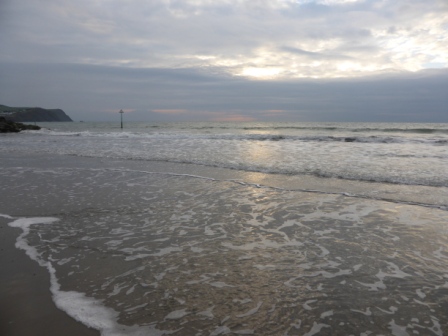 Beginning to fear he cannot bear his sadness anymore, he looks west. The sky is lit by a mysterious brightness. Breaking the pall like lightning, a white warrior steps from the mist with a horned helmet, upright shield and spear, leading a white horse streaming from its bridle followed by a white dog with a tail of clouds whose red nose is the setting sun.
The old man sees a thousand battles; shattered shields, broken helmets, heads pierced by spears, in his furious gaze. His ears fill with battle-cries; death-cries.
He sways in awe and terror before this fierce bull of battle, who seems to carry the very dead within his person, yet addresses him in the traditional manner and asks with dignity for protection.
“You who ask shall have protection.” The warrior’s kindness is disarming.
The old man trembles with relief. “Who are you? Where do you come from?”
“I come from many battles. Many deaths.”
Death-scenes flash before the old man’s eyes. Blood drenched armour. Men bent on spears. Words wrenched from agony. Flesh torn by ravens. He sees faces but cannot remember their names although he shares their pain and tears drench his cheeks. A wild whinny shakes him.
“My horse is Carngrwn; terror of the field,” says the warrior. “My name is Gwyn ap Nudd, lover of Creiddylad, daughter of Lludd.”
When the old man hears those names his inner crane-knowing awakens. He remembers his mother’s stories about Gwyn ap Nudd: the warrior-huntsman who haunts wildernesses and places of the dead and may be invoked or placated for love of his partner, Creiddylad. He remembers her crane-tales. How she lifted him from a crane-bag and gifted him with a name.
“My name is… garan…” he stumbles in reply… “Gwyddno… Garanhir.” As he recalls being taken into his mother’s white, feathery wings, other memories flood back to him: the names of his wife Ystradwen, his son Elffin, the child-bard Taliesin, Seithenin and Mererid who broke the flood gates.
Gwyddno speaks his rush of memories to Gwyn, who listens patiently until Carngrwn paws the tides and pulls away from the bridle, chomping foam from his golden bit.
“The white horse calls this talk to an end,” Gwyn speaks abruptly. “We must depart to further bloodshed in Tawe and Nedd, not this Tawe but the one far away where the tide ebbs fiercely on the shore. To my sorrow I attended a battle at Caer Fanddwy…”
Gwyddno shivers at Gwyn’s words of another Tawe and the name of a fortress that is not of thisworld. He recalls stories about Gwyn riding forth from the otherworld to gather the souls of the dead. An awful knowing washes over him like tidal waters, beginning from his toes.
The white hound draws closer ruddy-nosed. “His name is Dormach,” says Gwyn. “Do not fear him. He was with Maelgwn and has accompanied many of the other men of your lineage to protection within my realm.”
Gwyddno’s vision swims. Dormach shifts into mist to dog again his nose to sun to nose. The death-hound’s gaze remains constant, inescapable.
“I was there at the deaths of Gwenddolau son of Ceidio,” Gwyn says, “Bran son of Ywerydd, Llachau son of Arthur, Meurig son of Careian and Gwallog son of Llenog. I helped them cross. They will be waiting for you on the otherside.”
As the names of long forgotten kinsmen return to match their war-torn faces, Gwyddno yearns to be re-united. His crane-wings stir.
Yet the gatherer of souls has not finished his speech. Gwyn cries:
“I was there when the warriors of Britain were slain,
from the east to the north;
I live on; they are in the grave.
I was there when the warriors of Britain were slain,
from the east to the south;
I live on; they are dead.”
Gwyn mounts his rearing white horse and they depart in a fury of sea foam into clouds of unendurable brightness.
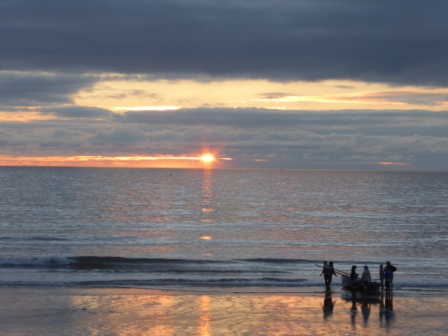 The mist lifts and Gwyddno sees his lost land illuminated within a boat’s reach by the light of the setting sun. Yet he does not need a boat and oars to follow where Dormach leads.
Gwyddno Garanhir hears the call of cranes bellowing, aching, sees their white wings, recognises every face, knows it is time to return to the flock. He spreads his wings. Puts on his red-black mask. His legs spell his crossing in black letters across blue-bright skies as he joins his kindred, finally touching feathers with his wife, promising later they will dance their names.
This crossing was not his final one. He may be found at Borth when the mist descends, white winged, crane-legged, a wise old man unsewing a crane bag, speaking of salmon, whispering to horses of sea-foam, a teacher of words and letters, telling often (as his mother did) the stories of Gwyn ap Nudd.

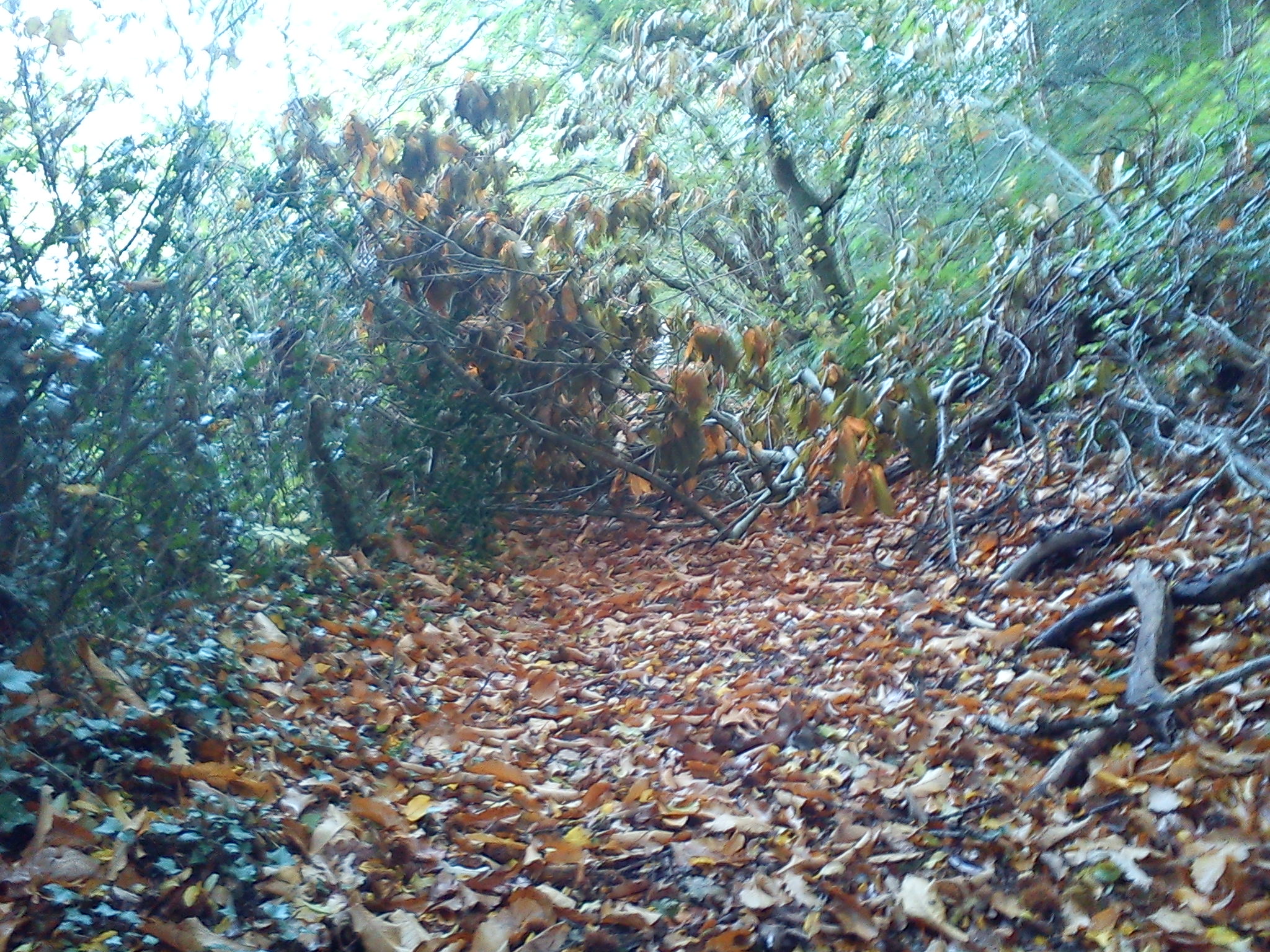
The shadows lengthen. But it is not yet dark. On the traditional date for Samhain kids are about in ghoul masks and the like but the seasons have shifted. It feels distinctly autumnal, but not yet the beginning of winter. In the woods the leaves have turned from green to gold. Though many have begun to fall, many are still on the trees. The way into the woods is blocked ; the ways are not yet open!
So I’ll wait another week until the Dark of the Moon before I mark the passing from light to dark. Today I placed what will very likely be the last rose of the season on my garden altar for Rigantona. Not yet does my focus move from the white horse to the brown whose wooden shape is slowly rotting into the roots of another rose bush.
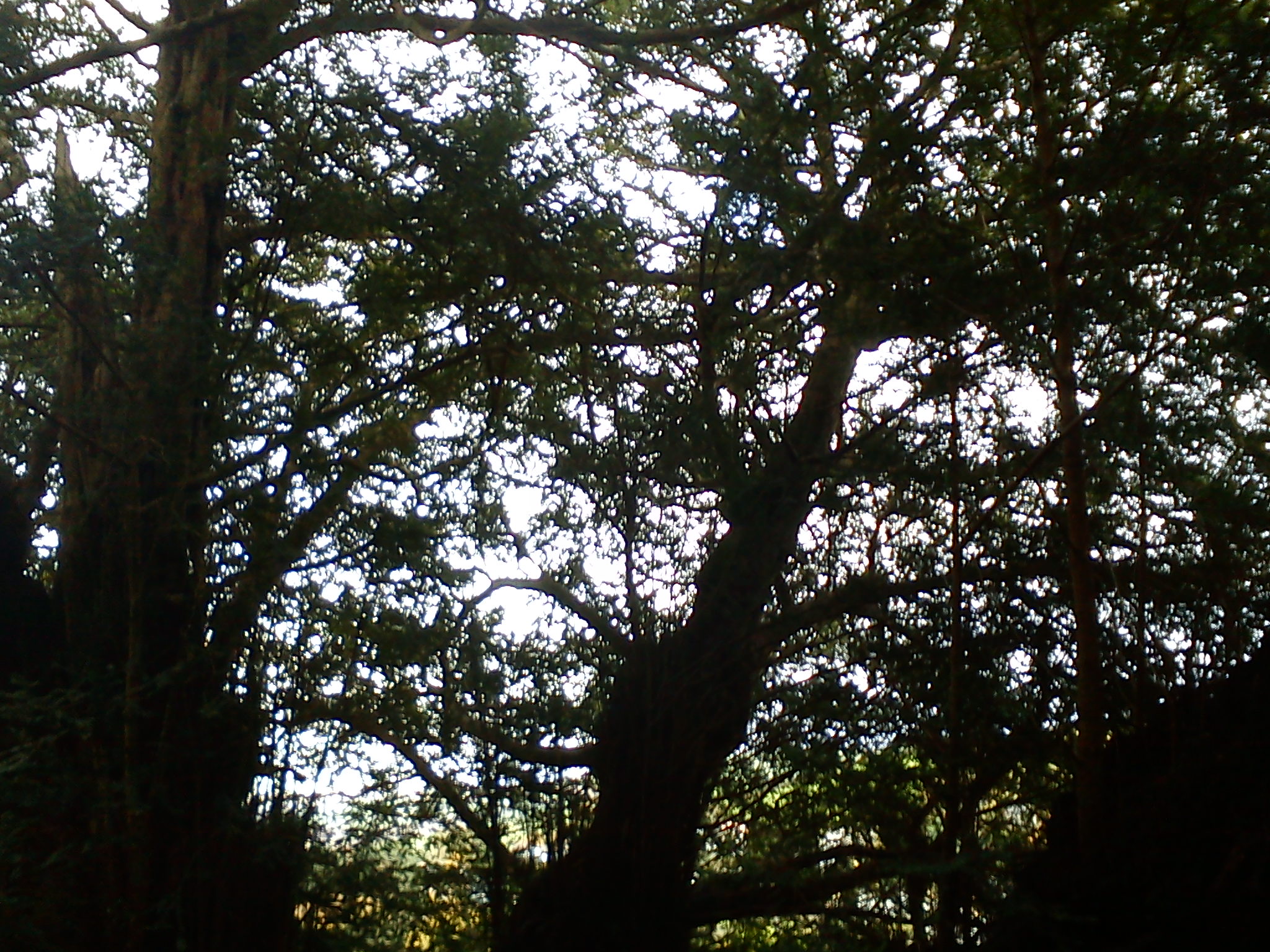
Below the woods I visited the yew tree and here, in its deep shade, there was indeed a premonition of what is to come. And so a pledge was made to return as the Moon wanes away, to dwell a while in the dark place at the heart of this ancient tree.
John Rhys, in his study Celtic Foklore (1901), discussing a poem in The Black Book of Carmarthen , dealing with the inundation of Cantre’r Gwaelod on the shores of Cardigan Bay, says this:
“The name … Mererid, Margarita, ‘a pearl’ … but what does it here mean? …. the name given to some negligent guardian of a fairy well. It cannot very well be, however, the name belonging to the original form of the legend.”
My own meditation on this question follows, based on my experience of this landscape and its resonant features.
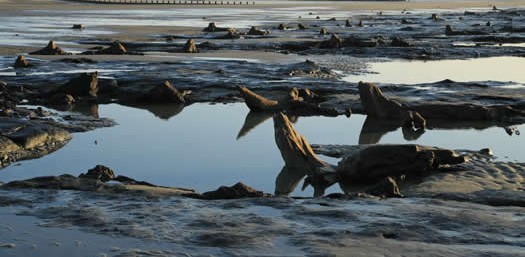 The remains of trees on the beach at Borth, Cardigan Bay
What is the name of the well maiden?
– the one who wept
tears of grief when the seal was broken
so the engulfing waters swept
over the land , drowning the forest that watched the sea?Was it ‘Pearl’
– a hidden bud
of moisture in the enclosing earth
and stone, its pulse swelling to a flood
rushing down the cairn-strewn hill?If not Mererid,
then to what hidden name will she answer
to those who seek the source?
Is she kin to Sulis or Coventina,
or to some sea nymph, say MorganaDwelling now in Gwyddno’s fort out under
the crashing waves
where the old road runs into the sea
her hair laved by the ebb and flow of the tides,
her wail echoed in the seabird’s plaintive cries.
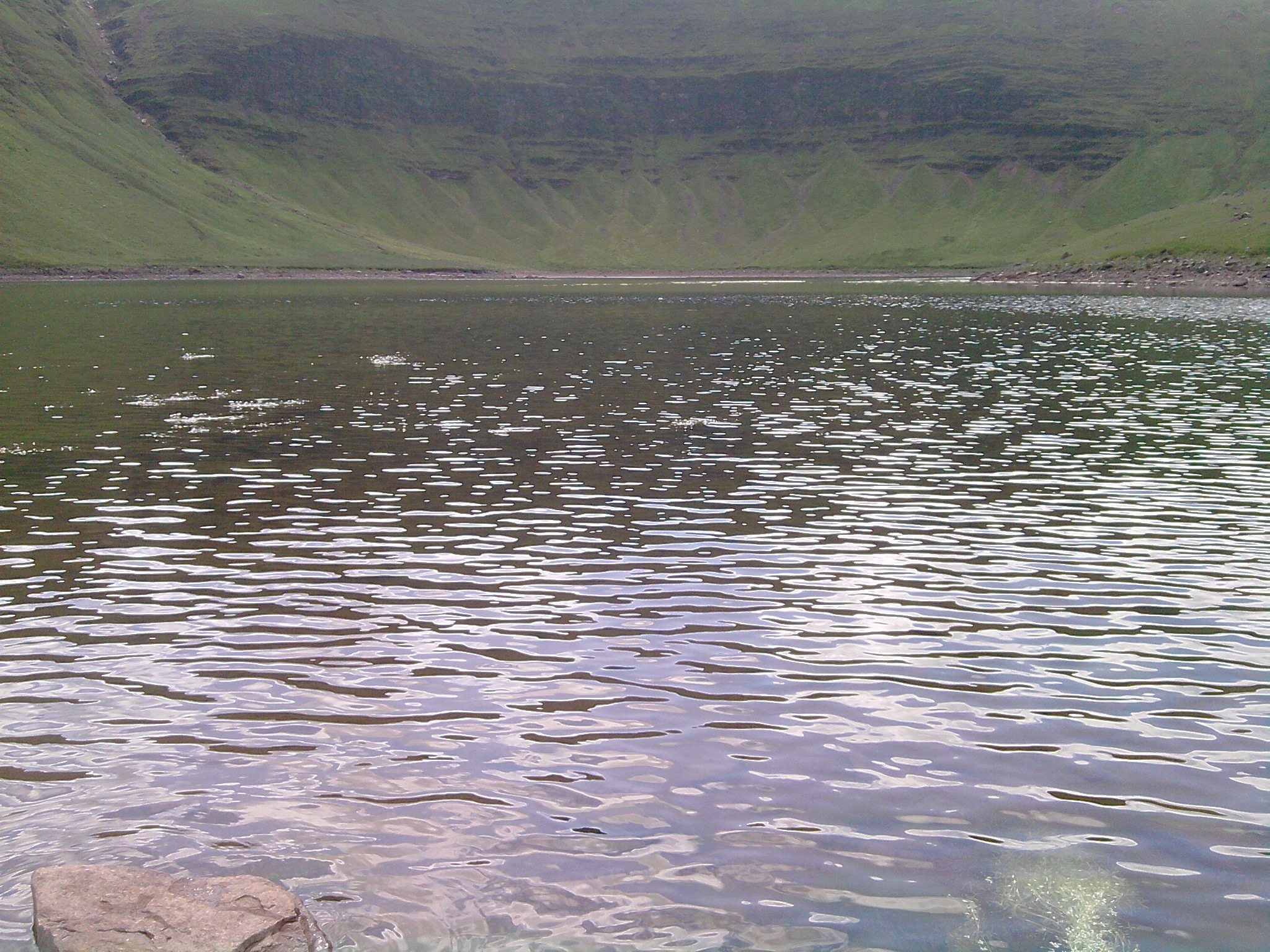
There was a fearsome serpent known as The Worm of Whispermere and no-one ever knew when it would appear and everyone went in fear of it whenever they took one of the paths through the wood or over the desolate hill. But it was part of the life of the land and the soul of the territory that everyone knew they belonged to. Then one day a brave knight came on a quest to slay the serpent and he rode through the wood and out onto the desolate hill with a fearsome spear and a sword and it was said that the serpent was no match for his terrible weapons. The knight rode back to the town and announced that the serpent was dead and drowned in the mere on the desolate hill. The knight decreed that his deed should be recorded in the annals to ensure his fame and then he rode off in quest of further adventures.
As for those left behind, for a while they felt safe to walk across the wild places without fear. But something was missing. Those places no longer felt so wild; in fact they felt ….. empty. Something had gone out of the world and the world had shrunk, become shallow. So it seemed. It wasn’t just that the serpent had gone into the deep mere. The mere itself was no longer deep, no more in fact than a shallow pool with not a whisper of mystery about it. The very deeps of the world had re-adjusted themselves. The shadows at the woodland eaves no longer beckoned or repelled. They were just ….. a bit of shade under the leaves. The path into the wood had been enticing with a bit of the spice of danger attached to it. Now it was just a muddy track that didn’t go anywhere particularly – only across that bare hill with nothing much to be said for it. So it seemed. Some remembered old stories, but less as time went on until there was nothing much to remember except some old tale about a knight, though no-one knew his name.
But if you take the muddy track through the wood and go onto the hill and find the pond, you may also find, looking into it, that the waters hold a secret and if you listen to the whispers in the ripples on the surface they might carry that secret to you so that, somehow, you might hear it. But if the deeps of the world with all their attendant fears and fascinations were then to tilt back out of the empty waters, and the shadows creep back through the eaves of the wood, might you discover the world to be a place where you could find yourself facing the knight, or whoever he would be nowadays, come to slay a serpent? And would you refuse his offer as an unwanted imposition, or would you accept his promise of security?

 greghill.cymru