AWENYDD PAGES
  • Iolo Morgannwg – A Brythonic Reconstructionist?

    January 10th, 2018
    Iolo
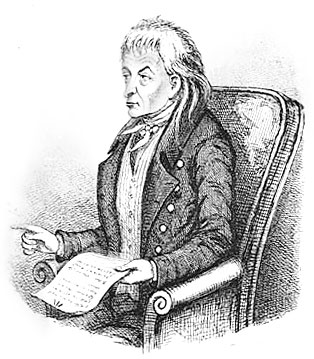
    Iolo Morgannwg – Etching by Robert Cruikshank

    Iolo Morgannwg has a reputation as a notorious forger of Welsh literary history. But perhaps we should remember him as the first Brythonic Reconstructionist. In Wales, where scholars first unmasked his imaginative reconstructions as a misleading distraction from their attempts to produce definitive texts of medieval Welsh authors, he has more recently been re-assessed as an important literary figure in his own right.[*] He was the progenitor of the modern bardic orders, both the direct descendant of his ‘Gorsedd’ which is associated with the annual National Eisteddfod festival held at a different site in Wales each year, and those druidic orders which practice druidry as a path of pagan spirituality. Iolo did not think of himself as a pagan, though he opposed the institutional power of the Church of his day. He, at various times, associated himself with Quakers and particularly Unitarians, portraying the three rays of the Awen as emanating directly from a single God.

    But he could certainly be called an Awenydd in his bardic practice, both in those poems which he acknowledged as his own and those which he attributed to others. The Gorsedd he created was not just an exercise in antiquarian speculation, it was a world he created so that he could actively inhabit it, a world in which druidic ceremonies validated in the present the lost inheritance of the past. Perhaps his most notorious forgeries were those of the poems of Dafydd ap Gwilym which he ‘discovered’ and persuaded others were genuine, plausibly enough for them to have found their place in editions of that poet’s work. Unlike some other notable forgeries of the Romantic period, and some of Iolo’s other creations, these were not of a wholly imagined poet, but one who existed and whose genuine works survive. What of those poems which did not survive? Iolo thought he knew, after all Dafydd visited him in his dreams and spoke to him. This has been attributed to the laudanum he habitually took to help him sleep. But he was also well-versed in the techniques of strict-metre poetry as written by the medieval Welsh bards and fully immersed in the ethos of Dafydd’s bardic practice and that of other bards, and so – in promoting their work as he did – he could also convincingly re-create it to fill the gaps which he perceived in the surviving record.

    Although antiquarians and scholars such as Edward Lhuyd had previously begun to re-connect with the Brythonic past before Iolo, it was he who successfully re-imagined and re-constructed it as a contemporary practice based on both a well-informed and on instinctive knowledge inspired by Awen and also with the skill he asserted an Awenydd must have, such as proficiency in the traditional metres and the word-music of cynghanedd. He was, in that sense, a true inheritor of the spirit of Taliesin who himself berated other bards whom he considered not to be true awen-poets. Many of Taliesin’s poems are now known to be the work of medieval bards who placed themselves in his tradition. As such they wrote not for fame or fortune but for the Awen which held them to proclaim, in Iolo’s words “Y Gwir yn erbyn y Byd” (‘The Truth against the World’ – words which are still proclaimed today in the ceremony of the chairing of the bard at the Welsh National Eisteddfod).

    Clearly that ‘truth’ was not affected in Iolo’s mind by the feigned authorship of some of the poems he wrote, any more than it was of the 12th and 13th century bards whose work was taken to be that of the 6th century Taliesin. “The truest poetry is the most feigning” says Touchstone in Shakespeare’s play As You Like It. W H Auden repeated it in the twentieth century with his own advice for lying poets. So what of the truth or otherwise of the world Iolo created? Consider these lines which he penned in English on visiting the imprisoned radical preacher William Winterbotham:

    Of late, as at the close of day
    To Newgate’s cell I bent my way
    Where Truth is held in thrall
    I wrote, that all might plainly see
    My name, the Bard of Liberty
    And terror seized them all.

    Although this is to be seen in the context of Iolo as a political radical, he in no way separated his politics from his bardism [**]. The first five lines are an accurate account of his visit and how he identified himself in the visitor’s book. He was subsequently asked to leave without seeing the person he came to visit. We might think, therefore, that the last line is wishful thinking. Iolo was, on more than one occasion, investigated for sedition when it was feared that the Revolution in France would spread to Britain. So the authorities were certainly worried about him, if not terrified. In championing Truth, he clearly also took liberties, but it may now be time to re-assess him and celebrate all that he subsequently made possible by his activities. For us today ‘The Bard of Liberty’ and the ‘Bardd-Awenol’ might be co-identities we can comfortably inhabit.


    [*] A recent academic project based at the Centre for Celtic Studies in Aberystwyth : lolo Morgannwg and the Romantic Tradition in Wales has resulted in a number of major assessments of Iolo’s life and work, establishing him as an essential figure in Welsh, and indeed British, cultural history.

    [**] Iolo was in London in the 1790’s to promote his English-language collection Poems Lyrical and Pastoral and to promote himself as ‘The Bard of Liberty’. It was at this time that he held the first of his Gorsedd ceremonies on Primrose Hill and also circulated in the milieu of other radical poets and artists of the time such as the young S T Coleridge and William Blake.


  • BARDDAS

    January 1st, 2018

  • Midwinter Calendar

    December 17th, 2017


    Gŵyl Epona

    Epona’s Day, then darkness falls
    Time is still, though in the deepest
    Well of Night something stirs.

    Heuldro

    Solstice Night when the ebb
    Returns to flow unseen
    Far away from gleam to gleam.

    ModronNos

    With each gleam the light lengthens
    From minute to minutes as a year strengthens
    Out of the darkness into the light.

    MabonDydd

    A new day, a new year
    ‘XV Kalendas Ianuarius Eponae’ (*)
    So we count the days of Midwinter.

    ~§~

    • (*) ’15 to the first day of January [from] Epona’s [day]’ ;
      (An inscription from Cisalpine Gaul)
  • Annuvian Awen

    November 22nd, 2017

    Annuvian Awen : Re-blogged from Lorna Smithers

    Lorna Smithers's avatarThe Sanctuary of Vindos

    Annuvian Awen

    Allan o dywyllwch caf fy ngeni
    Allan o waed caf fy ngeni
    Allan o ysbryd caf fy ngeni

    Yn canu o Annwn

    Tri phelydryn golau
    Tri phelydryn llais
    Tri phelydryn wirionedd

    I oleuo â rhyfeddod
    Ac yn torri’r galon wytnaf

    Yn canu o Annwn

    ~

    Out of darkness I am born
    Out of blood I am born
    Out of spirit I am born

    Singing from Annwn

    Three rays of light
    Three rays of voice
    Three rays of truth

    To illuminate with wonder
    And break the hardest heart

    Singing from Annwn

    ~

    About a month ago I awoke with the symbol above in my mind with the name ‘Annuvian Awen’. Awen derives from the Indo-European *-uel ‘to blow’ and has the same root as the Welsh awel ‘breeze’. It is the primordial breath that binds all things, as Kristoffer Hughes says, ‘the voice of the universe speaking to itself’.

    The Awen…

    View original post 557 more words

  • For The Birds of Rhiannon at The Dark of the Moon in November

    November 17th, 2017


    epona beasts
    EPONA from a funeral stone in Gaul

    ~§~

    ‘dyuot tri aderyn, a dechrau canu udunt  ….. uch ben y weilgi allan’ (*)
    Branwen Uerch Lyr

    ~§~

    Birds of Rhiannon, sing for the dying
    Over the waves of the wolf-grey sea;
    Gather them with you, those who are leaving
    Behind them the world’s sweet harmony.

    Birds of Rhiannon, call to the dead
    Over the waves of the wolf-grey sea;
    Bid them witness the echoes fading
    Out of the world’s sweet harmony.

    ~§~

    (*) ‘three birds came and began singing to them ….. far out over the sea’.

    The word for ‘sea’ here is ‘[g]weilgi’. Gweilgi indicates a ‘howling wolf’ and is often used in medieval Welsh texts, rather than ‘môr’ to mean ‘sea’.  The 20th century Welsh poet Gwenallt used the words ‘y weilgi werdd‘ (‘the green sea’) to write of ‘Adar Rhiannon‘ and his poem has influenced the shape of the above verses.

  • The Conversation Between Taliesin and Ugnach

    November 7th, 2017
    blackbookofcarma00evanuoft_0149
    The Opening of the poem inThe Black Book of Carmarthen from the facsimile of Gwenogvryn Evans

    One of the most intriguing of the ‘conversation’ poems in early Welsh is that between Taliesin and Ugnach. Two separate manuscripts of the poem have survived, one in The Black Book of Carmarthen and another in a separate manuscript also kept in The National Library of Wales. The poem has been interpreted in a number of ways and a few ambiguous words in one of its englyns have given rise to much speculation about the context for the poem. I will discuss these matters after giving my translation.  I should make it clear here that I read it as a straight-forward encounter with an Otherworld character whose identity I will also suggest below. A remarkable feature of the poem, if it is viewed in this way, is that Taliesin is reluctant to accept the invitation offered to him, given the apparently fearless forays into the Otherworld which are a feature of some of the poems attributed to him.

    Who is Ugnach that Taliesin should be so deferential to him and yet refuse his offer of hospitality? In the poem he says that he is ‘Ugnach, Son of Mydno’ but Taliesin claims not to know him and there are no references to this character elsewhere unless we can equate him with the ‘Mugnach’ mentioned in the Triads as the father of Fflur who is beloved of Caswallawn. There he is named with the additional appellation ‘Gorr’ which is usually presumed to be an abbreviation for ‘Corrach’ (dwarf) but it might also be a scribal mistake or variant of ‘cawr’ (giant). Names ending in ‘-ach’ tend to signify supernatural characters such as ‘Wrnach’, a giant and Diwrnach, the Irish owner of a magical cauldron, both of whom feature in Culhwch and Olwen. Attaching the suffix -‘ach’ to the Welsh word ‘gwraig’ (woman) gives ‘gwrach’ (witch). So it might be that the name’s significance is as much in its suffix as in any genealogy.

    Following the conventional exchange when two horsemen meet each other, Ugnach is immediately insistent that Taliesin should accept his hospitality – ‘You cannot refuse’ – but Taliesin, as politely as possible, does refuse. He says he is on his way to the fortress of Lleu and Gwydion (presumably Dinas Dinlleu in Gwynedd, a location which is the setting for part of the Fourth Branch of the Mabinogi ?) When asked where he is coming from he says ‘Caer Seon’, a place that has a number of possible locations.

    Why will Taliesin not go with Ugnach? It may be that he really is in a hurry, but there is a certain tension in the exchange between them that suggests an evasiveness on Taliesin’s part and an insistent lure on the part of Ugnach. It has something of the atmosphere of the exchanges between the boy and the crone or ‘false knight’ in the folk ballad ‘The False Knight on the Road’ and its variants. Here, though, Taliesin does not try to cleverly outwit Ugnach but, in accordance with convention, to politely but firmly decline his offer. Does Taliesin fear the consequences of going with Ugnach, perhaps thinking he may never return? This suggests a skilled mediator with Otherworld beings who is wary of what this one wants with him.

    The poem is written in the form of a series of three-line englyns with each of the three lines featuring end-rhyme, something not achievable in the translation but which, along with the syllabic requirements of the englyn form, may have a bearing on the particular choice of words and therefore may be a factor in the issues discussed below.

    TALIESIN:

    Horseman who rides to the fortress
    With white hounds and great horns
    I see you but I do not know you.

    UGNACH:

    Horseman who rides to the estuary
    On a steed strong and steadfast
    Come with me, you cannot refuse.

    TALIESIN:

    I cannot go there now
    I have no time to delay
    Blessings go with you from above and below.

    UGNACH:

    Warrior who is not seen here often
    With the look of one who is fortunate
    Where do you go and from where do you come?

    TALIESIN:

    I come from Caer Seon,
    From contesting with strangers;
    I go to the fortress of Lleu and Gwydion.

    UGNACH:

    Come with me to my fortress
    For shining mead
    And fine gold for your spear-rest.

    TALIESIN:

    I do not know you bold warrior
    Who promises mead and a bed,
    Your speech honeyed and fair.

    UGNACH:

    Come to my domain
    For wine flowing freely.
    Ugnach am I, named son of Mydno.

    TALIESIN:

    Ugnach, blessings to your Gorsedd,
    May you have favour and honour.
    Taliesin am I and I’ll acknowledge your feast.

    UGNACH:

    Taliesin, greatest of men,
    Most accomplished in bardic contest,
    Stay with me until Wednesday.

    TALIESIN:

    Ugnach, most richly endowed,
    Grace to your great land;
    No censure on me that I cannot stay.

    §

    On the face of it this seems to be an encounter with a character from the Otherworld, a character who bears a striking resemblance to Gwyn ap Nudd with his pack of white hounds. This is how I read it so this has had a bearing on how I have translated it. But other contexts have been argued for, mainly centring on the interpretation of the fifth englyn. There Taliesin says he comes from ‘Caer Seon’ where, in the second line of the englyn, he says he has been ‘ymlit ac itewon’. On the face of it these words seem to mean ‘fighting (or disputing) with jews’. Taking the word ‘itewon’ to be the earliest example of the modern Welsh word ‘iddewon’ (jews) would certainly give such a meaning for the line. This has led to one interpretation of the poem as an account of Taliesin returning from the Crusades, making ‘Caer Seon’ Jerusalem and ‘jews’ a generic term for those being attacked there [1]. A much more likely word, in that case, would be ‘saracens’ but there are several examples in medieval literature in English as well as Welsh of such words being mixed up or having a general application to refer to ‘others’. Elsewhere, saracens were even conflated with saxons, and the precise identity of peoples from other cultures would not necessarily be distinguished and the word for one could serve as the word for others, particularly if they were all ‘enemies’ [2] For this reason I have preferred to translate ‘itewon’ (which end-rhymes with ‘seon’ and ‘gwidion’) as ‘strangers’. There is, of course, no need to opt for the ‘crusade’ theory even if ‘itewon’ is retained as ‘jews’. There are possible locations for ‘Caer Seon’ on the island of Anglesey and near Conwy on the coast of North Wales. Taliesin could have been engaging in theological disputes or bardic contests (rather than fighting) with jews in either of these places, though it seems unlikely. Or he could have been coming from Arthur’s court at Caerleon, where such a contest is a little more possible.

    Some scholars have suggested that ‘itewon’ might be a mistake for ‘cerddorion’, and that Taliesin was therefore engaging in expected bardic contests with other poets, especially if Caer Seon is taken to be a court of Maelgwn Gwynedd at Deganwy near Conwy. Similarly ‘itewon’ has been taken as a developed form of the place name ‘Iudeu’ , thought to be on the Firth of Forth, which would mean that Taliesin had journeyed from the Old North, possibly to North Wales or possibly to another destination in the Old North. But all of this is a distraction from the encounter with Ugnach. It seems clear that Taliesin is being invited to an Otherworld caer and that he refuses the invitation. If we may take Ugnach to be Gwyn ap Nudd two possibilities may be considered. One is that Taliesin’s boastful expeditions to the Otherworld, such as that described in Preiddeu Annwn, are conducted as raids either for treasure or for poetic inspiration. Here he is invited to visit as a guest, or perhaps is being lured there to account for himself. Clearly he is not prepared to go on these terms. The other possibility, suggested by at least one scholar [3] is that he is dead and that Ugnach is bidding him come to the ‘great land’ as he acknowledges it, and that he is either not yet ready to go, or he is going elsewhere. If so Ugnach may well be Gwyn ap Nudd, in another guise. The fact that Taliesin says he journeys to the fortress of Lleu and Gwydion has been seen as a possible reference to the Milky Way (Caer Gwydion), that is, he has his sights on a higher destination. The possibility that this would mean ‘Heaven’ in a christian sense, or an alternative Otherworld location of which Gwydion is the ruler – imponderable though that may be – is also worth pondering.

    References

    Llyfr Du Caerfyrddin ed. A O H Jarman (Cardiff, 1982)

    ‘Rhai Cerddi Ymddidan’ Brinley F. Roberts in Astudiaethau ar Y Hengerdd ed. Rachel Bromwich & R. Brinley Jones (Cardiff 1978)

    Alexander Falileyev ‘Why Jews? Why Caer Seon? Towards Interpretations of Ymddidan Taliesin ac Ugnach’ in Cambrian Medieval Celtic Studies No. 64 Winter 2012

    [1] By Graham Isaac in an article discussed by Alexander Falileyev (see above).
    [2] As suggested by Marged Haycock in her notes to the poem ‘Kadeir TeŸrnon’ Legendary Poems From The Book of Taliesin (CMCS, 2007) p.310
    [3] Also proposed by Graham Isaac and discussed by Alexander Falileyev (see above).

  • Picking Sloes for Gwyn ap Nudd

    September 30th, 2017
    blackthorn
    Prunus spinosa / Blackthorn

    There is a folk tradition  that blackberries should not be picked after Michaelmas Day, as they then belong to the Devil. The idea behind this is that Michael cast him out of Heaven  on this day and he landed in a tangle of brambles so afterwards the berries were tainted with his blood and not fit to eat. Whether the cut-off date is to be taken as the current 29th September or Old Michaelmas Day on 10th October is presumably dependent on how much of a risk the pickers wish to take!

    Blackberries have not been plentiful this year where I live. But we went out on 29th September to pick sloes, which hung in inviting blue-black profusion on the blackthorn trees along the edge of the sunken lane where we usually find them. Sloes can be picked later than blackberries but we gathered them today for Gwyn ap Nudd because we were celebrating the restoration of his feast day (for which see THIS POST on the Brython Blog by Lorna Smithers). It has always been our custom to take the dregs of previous batches of sloe gin we make from them to return to the earth something of what we have taken. We did so again this year, but also took some very drinkable sloe gin from a good vintage to toast our labours and to pour a libation for Gwyn ap Nudd.

    These sloes were picked on his feast day and the sloe gin we will make from them will be made for him, so he will be welcome at our winter festivities and in quiet moments or special occasions when it will be savoured.

    These dark berries are astringent. The drink they make is powerfully pungent. As such it contains something of his nature. But there is no repugnance or reluctance – such as that associated with the Devil’s Blackberries – felt at the gathering of Gwyn’s sloes to infuse our gin. They can be gathered until Calan Gaeaf, even until Old Calan Gaeaf,  after which they will no longer be at their best and the Cailleach’s withered fingers may claim them. But their spirit will be contained because we gathered them for Gwyn ap Nudd.


  • The Grail

    September 13th, 2017


    The Nanteos Cup at the National Library of Wales in Aberystwyth

    The earliest surviving specific tale of the Grail is the unfinished 12th century story of Perceval (Conte de Graal) by the French Romance writer Chrétien de Troyes. Chrétien simply spoke of ‘a grail’; another french writer, Robert de Boron, later christianised this as ‘The Holy Grail’. Seeing the Grail as a Christian symbol led to it being identified as the communion cup used by Christ at the Last Supper. Such is the story attached to the wooden bowl also known as the Nanteos Cup, after a mansion in West Wales where it was kept for many years, though it had previously been the property of the nearby medieval abbey of Strata Florida. The cup has more recently been in the news after it was stolen but, since recovered, it is now in the possession of the National Library of Wales, where it is currently on display. I went to see it, though very little is left of it. It is easy to see how, in the later Middle Ages, such a cup should have attained this status as holy relics were the stock in trade of medieval monasteries and cathedrals, far more of them than could possibly be genuine. The relic itself is a symbol, metonymically representing the thing it purports to be or, perhaps, actually is.

    But the communion cup, the dish of plenty, the cauldron of mystery have a far older lineage. Consider the words of Glenys Goetink who, in her study of the Welsh grail stories, asserts that, behind the Christian relic, the Grail “derives from one of the talismans found in the dwelling of the Otherworld god; it was of great significance in the ritual of conferring sovereignty upon the hero on the occasion of his visit to the Otherworld.” (*) This is certainly the implication of the story as told by Chrétien and in the parallel Welsh Romance Peredur. The Grail in Chrétien’s story is a dish held by a maiden in an episode in which the questing hero comes across a castle in a remote place. A bleeding lance is also carried through the room where he sits conversing with the lamed Fisher King. In the parallel scene in the Welsh story of Peredur the dish is a platter on which sits a severed head. In both cases Perceval/Peredur does not ask the meaning of the objects carried into the room. In Chrétien’s story Perceval awakes the next morning to find the castle empty and with only one way open for him to leave. After he has left he can’t go back and cannot find the castle again. In both stories the hero is later rebuked for not asking the question which would have healed the king, and then sets off to find the castle again. Chrétien’s tale is unfinished so we never know if Perceval eventually finds the castle. Peredur does find it after a random series of adventures which culminate in the killing, with Arthur’s help, of The Nine Witches of Gloucester.

    There has been much speculation from different scholars about influences. It is likely that later medieval writers took the story from the French of Chrétien or his successors. Did Chrétien get his story from Brittany, from the same source as the anonymous Welsh author of Peredur, or were there different sources available to both of them? One certainly earlier possible source is the Irish story Baile in Scáil which several scholars have noticed contains parallel scenes to the episode of the visit to the Grail Castle. ‘Baile’ (modern Irish ‘buile’) means ‘frenzy’, though it is sometimes translated ‘ecstasy’ as in terms of the baile stories it describes the ecstatic frenzy which druids, female seers and other gifted people go into to gain visions or make prophecies, much as Giraldus Cambrensis describes the awenyddion in Wales. John Carey provides an extensive analysis of this tale and its possible links with the Grail stories. Here the frenzied visionary state is entered by a ‘phantom’ who turns out to be Lug, and a woman with a crown of gold who asks ‘to whom shall this cup be given?’. Carey says the following about the similarities between the two stories:

    “In both, the protagonist comes upon a rich and mysterious stronghold, which is at first concealed from him. He is lavishly entertained by a gracious host, who seems to be identical with a figure who has acted as a guide earlier in the tale. A central part in the feast is played by a young woman who serves as custodian of a extra-ordinary golden vessel; and the apparition of the vessel is associated with the protagonist being served roasted meat. The question as to who it is whom this vessel serves is the pivot of both stories. After the feast, everything disappears: Perceval falls asleep, then wakes in an empty castle which he is unable to find again after he has left it; Conn passes ‘into the shadow’ of Lug, and is suddenly back in Tara.” (**).

    Conn, unlike Perceval, is not found wanting and so his sovereignty, and that of his line backwards and forwards, is confirmed  and no further searching, such as that undertaken in the later stories, is necessary. In the Welsh tale the situation is eventually resolved, though the significance of the episode gets lost in the series of other adventures it is mixed up with. In the French tale, and even more so in those that came after it, the quest of the Grail becomes an end in itself. That is it becomes a tale of sin and redemption in the best Christian tradition of the Middle Ages. It also becomes a symbol of purity, or the virtuousness of those who seek it. But what was the original cup of sovereignty that seems still to be fulfilling that function in the Irish story? Carey is suggestive in linking it with the role of the cup bearer as identified by Michael Enright (***) and so, possibly back to Rosmerta. Proinsias Mac Cana also refers to this story and identifies the cup bearer as ‘the Sovereignty of Ireland’, the personification of the land itself, who, coupled with Lug, “can scarcely be dissociated from the Gaulish monuments to Mercury and Rosmerta”.(****)

    References
    * Glenys Goetink Peredur : A Study of Welsh Tradition in the Grail Legends (Cardiff, 1975)
    ** John Carey Ireland and The Grail (Aberystwyth, 2007)
    *** M J Enright Lady With a Mead Cup (Dublin, 1995)
    **** Proinsias Mac Cana Celtic Mythology (Hamlyn, 1983)

  • Branwen

    September 13th, 2017

    Bedd Branwen
    Bedd Branwen (Branwen’s Grave) at Aber Alaw.
    A Neolithic standing stone here was later covered by a Bronze Age burial mound.

    A honno oed tryded prif rieni yn yr ynys hon
    (And she was one of the three great progenitors of this Island)

    How far back before her story was told
    Did she proffer the cup of sovereignty of the Island
    Her giant brother – or other self – holding it as a cauldron
    Before the spring which pulses beneath Loch Febuil flooded the fair plain
    So that the one who plundered and the one who held the treasure became one
    Long before the islands of Britain and Ireland were sundered
    Before the wolf-grey seas rushed in and so they were separate
    Brother and Sister in the legends of the land
    (though he would be a bridge between them).
    Who then sought sovereignty and where was its source?

    Each of them buried deep in the Earth of the Island
    Held it in safe keeping : She in a grave at Aber Alaw,
    He under the White Mount where Arthur sought him
    Taking the sovereignty to hold for his own:
    The raid on the White Mount, the raid on Annwfn,
    The raid for the Cauldron there and in Ireland
    Retelling the story over and over again
    (as Culhwch got Olwen and the Giant was vanquished)
    Re-living the quest of Bran for the Cauldron
    Beneath the spring where Branwen held it.

    Notes

    In the Welsh of the Second Branch of the Mabinogi Brân – or Bendigeidfran – is a giant and is brother to Branwen and Manawydan, offspring of Llŷr. Brân has a cauldron which came with another giant from under a lake in Ireland and is sent back to Ireland with Matholwch when he marries Branwen.

    In the well-known Irish story of Bran Son of Febul he sets off in a ship to sail to the Otherworld and meets Manannan Mac Lir on the sea who directs him on his way.

    The lesser known story about Bran Son of Febul is recounted in some verses recording an exchange between Febul’s Prophetess and Bran’s Druid. The druid recounts how he had a vision of treasure hidden under a spring and of Bran’s quest to recover it. The Prophetess tells of how beautiful the plain around the spring was before the treasure was taken and how the land was flooded because Bran’s expedition offended the female guardians of the spring. The resultant flood formed Loch Febuil, now known as Lough Foyle.

    Arthur in the Welsh poem Preiddeu Annwn, from The Book of Taliesin, sails in his ship Prydwen to raid the Otherworld in search of treasure, in particular a cauldron. One of his men, Lleawc, thrusts his sword into the Cauldron. In the Welsh tale of Culhwch and Olwen, Arthur sails to Ireland to get a cauldron. One of his men, Llenlleawc, said himself to be an Irishmen, wielding Arthur’s sword, captures the Cauldron.

    Brân’s head was buried beneath the White Mount to protect the Island of Britain. In one of the Welsh triads, Arthur is said to have dug up the head because he wanted to be the sole protector of the Island. So the symbol of sovereignty became the Crown.

  • Echoes of Etain

    September 13th, 2017


    Midir and Étain , Becoming Swans.

    Reflections after a reading of The Wooing of Étain :

    Oengus Mac Óc taken from his mother
    So his father would not know him
    (as Mabon from Modron; Pryderi from Rhiannon)
    To be fostered by Midir.

    Étain Echraide – (of the horses)
    Poured drink for the company;
    This was a skill she had, to pour;
    A Cup Bearer supreme among many.
    It was then that Midir came for her.

    Links in a chain of story – beyond time
    for time has no part in its telling:
    Images and incidents recurring, repeating
    the fractured joins of narrative dissolving.
    The gods, in their own way, speaking
    to us : always now, never history.

←Previous Page
1 … 4 5 6 7 8 … 13
Next Page→

Create a website or blog at WordPress.com


Loading Comments...
 

    • Subscribe Subscribed
      • greghill.cymru
      • Join 74 other subscribers
      • Already have a WordPress.com account? Log in now.
      • greghill.cymru
      • Subscribe Subscribed
      • Sign up
      • Log in
      • Report this content
      • View site in Reader
      • Manage subscriptions
      • Collapse this bar